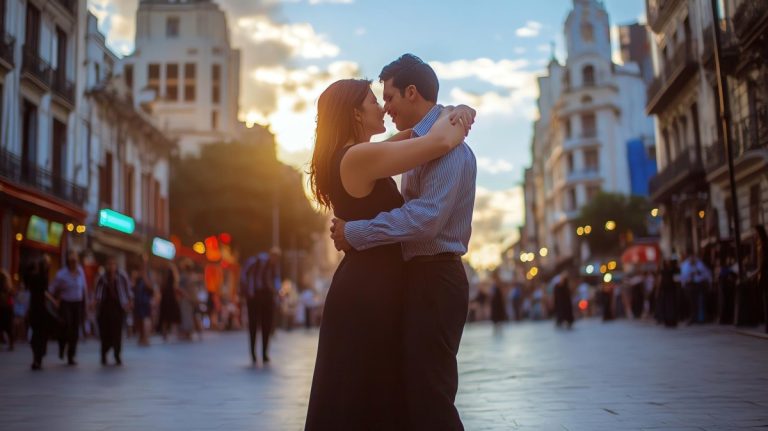
Tango, in particular, has a way of catching people off guard with how much it asks of them and how much it gives back in return. Unlike other forms of dance, tango is built on a wordless conversation between two people, a non-stop exchange of intention, presence and trust. What looks from the outside like grace and drama is, underneath it all, a full-body experience that challenges the brain just as much as the body. Scientists and researchers have been paying close attention, and what they are finding is legitimately interesting.
Dancing, in its many forms, has long been recognized as good for the body - a way to get moving, to build strength, to shake off the stiffness of a sedentary day. But the benefits of dance, and that's also the case with tango, reach into territory you would never expect. The physical rewards are real and measurable. But so are the effects on mental sharpness, emotional resilience, and even the way people connect with each other and with themselves. Read on and discover the many benefits that people have discovered by starting beginner Tango in Los Angeles.
I'll explore it all - the physical, the mental and the emotional - with tango as the heart of the conversation. Whether you have danced your whole life or have never set foot on a dance floor, what follows might just change the way you think about movement.
Key Takeaways
- Dancing burns 200-500 calories per hour while simultaneously improving strength, flexibility, balance, and coordination.
- A 21-year study found dancing reduced dementia risk by 76%, the highest result of any physical or cognitive activity tested.
- Tango dancers' brains appeared approximately 7 years younger than non-dancers of the same age, according to Nature Communications research.
- Argentine tango outperformed other dance styles in improving balance and stride in Parkinson's disease patients, per documented clinical research.
- Tango's close-embrace, non-verbal connection reduces stress and loneliness, offering emotional and social benefits beyond typical gym exercise.
Why Dancing Is One of the Most Complete Workouts You Can Do
Most workouts ask you to focus on one thing at a time. You lift weights for strength, run for cardio, or stretch for flexibility. Dancing does these at once, which is what makes it so helpful as a form of exercise.
When you dance, your heart rate goes up just like it does during a jog or a cycling class. At the same time, your legs, core and arms are working to control your movements and hold your posture. Your brain is also active the whole time, processing rhythm, spatial awareness and coordination in time.
A one-hour dance session can burn anywhere from 200 to 500 calories depending on the style and intensity. The general time for a beginner Tango class in Los Angeles is around 1 hour. That puts it in the same range as swimming or a moderate run. The difference is that people don't clock-watch during a dance class the way they might on a treadmill.
Flexibility gets a workout too. Dance movements take your joints through a number of motions, which builds mobility over time, especially helpful as you get older. Maintaining flexibility helps to protect against injury and makes movement easier. Our beginner Tango and intermediate Tango classes in Los Angeles cover all age ranges.
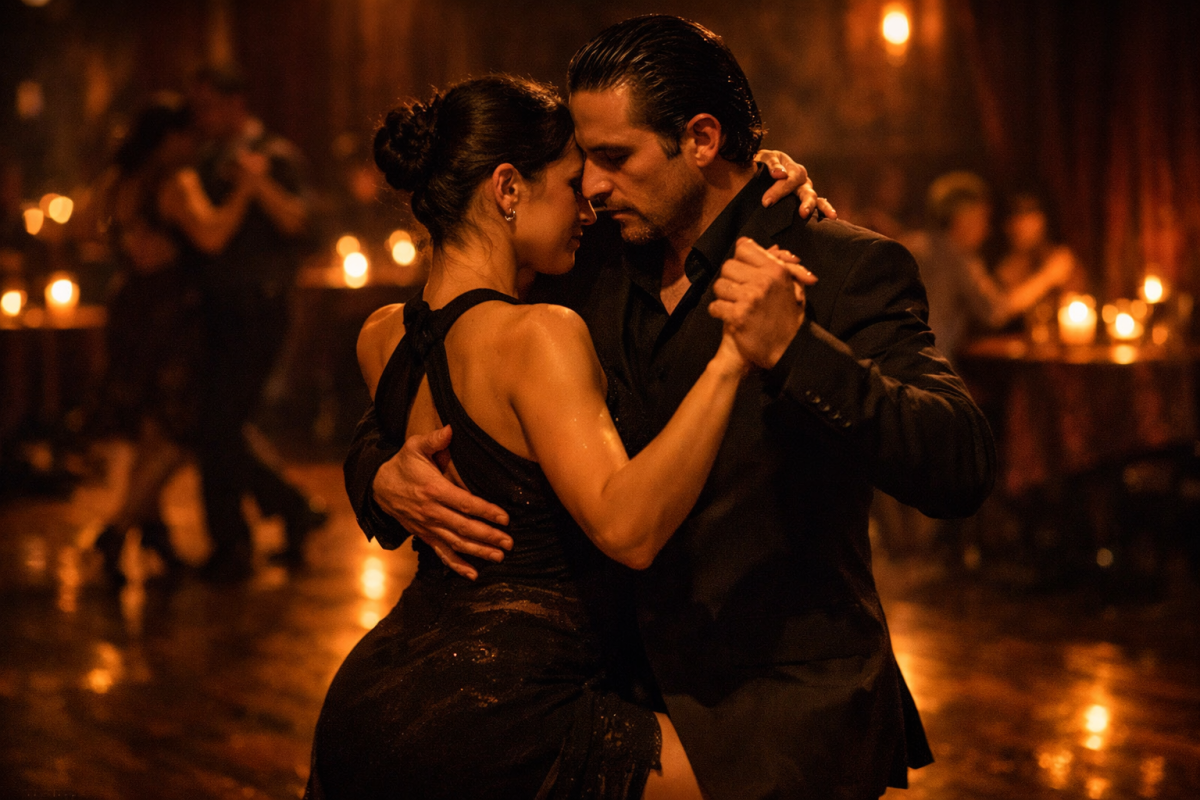
Balance and coordination improve with practice as well. Your body learns to shift weight, change direction and stay upright under pressure. These are not small benefits - balance and coordination matter a great deal for long-term physical health.
There is also a social and emotional side to this that pure gym exercise doesn't always give you. Dancing with a partner or a group can add connection and enjoyment to the physical effort. The cool thing about starting beginner Tango classes in Los Angeles is that the groups are small and you have the opportuinty to dance with many partners as partner rotation is part of each Tango class that we offer in Los Angeles. That matters more than it might sound, because enjoyment is one of the strongest predictors of whether someone sticks to an activity long term.
Few workouts actually make you smile while you do them, and that's not a small thing. Exercise you want to do is always going to do more for you than exercise you force yourself through.
What Makes Argentine Tango Stand Out From Other Dances
Most partner dances follow a fixed sequence of steps. Argentine tango does not. The leader decides what to do in the moment and the follower responds in time - which means both partners have to stay present throughout the dance. Jordi Caballero teaches beginner, Intermediate and advanced Argentinian Tango classes and private Argentine Tango classes daily in Los Angeles.
That non-stop engagement gives you a physical experience that's hard to match. The close embrace used in Argentine tango requires partners to make contact and read subtle changes in weight, posture and direction - this places demands on your core, your balance and your ability to move with accuracy.
The stance itself is worth mentioning. Argentine tango holds you in a slightly forward lean with slow, controlled movement close to the floor; it's different from something like salsa or ballroom, where the movement is upright and rhythmically predictable. Tango asks your muscles to work in a way that's more sustained and deliberate.
Researchers at the Federal University of Santa Catarina looked at what tango does to the body over time. After 32 weeks of practice, participants showed improved functional capacity and lower systolic blood pressure. Those are actual physical changes and they came from dancing - not from a gym program.
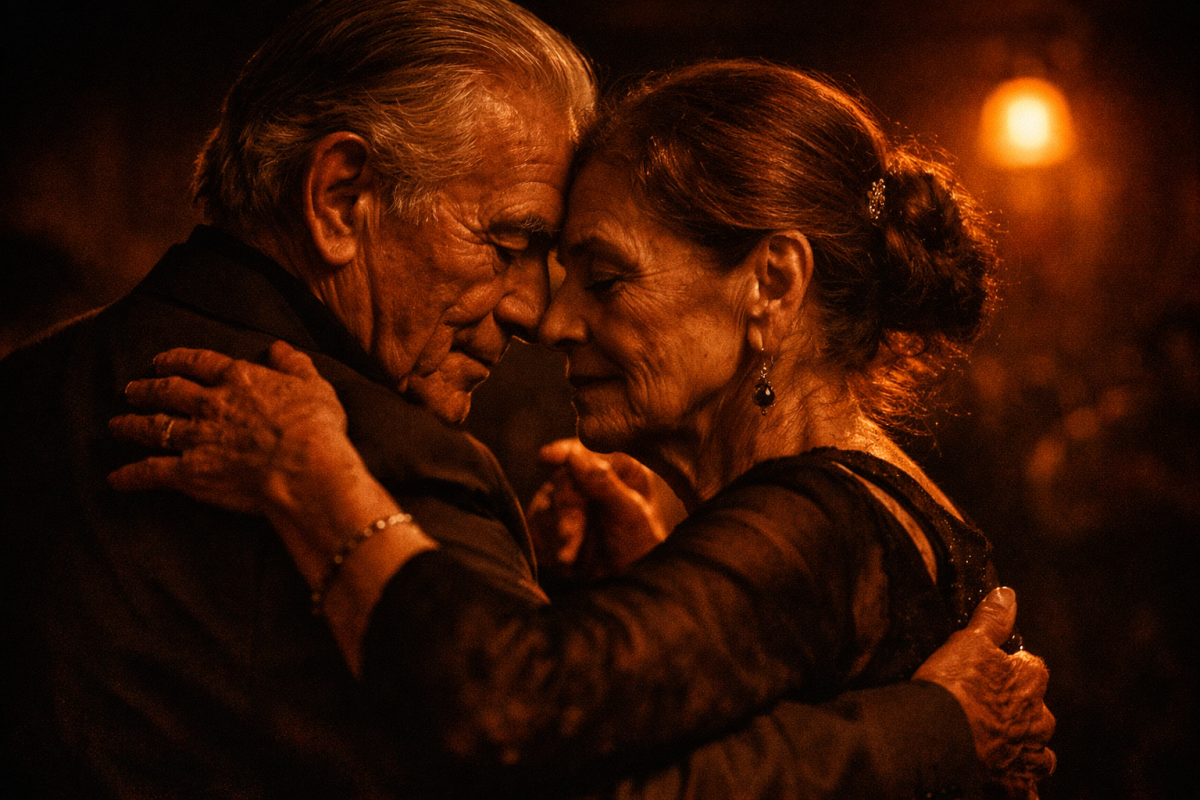
Part of what drives those results is how much the body has to engage to execute tango well. The slow sections demand stability and control. The faster sequences demand coordination and timing. The body is always switching between the two, which keeps it working without feeling like a workout.
There's also the social ingredient. Tango is danced in close connection with another person and that requires a level of attentiveness that other dances don't always call for. You can't zone out. See what tango looks like in practice to get a sense of the connection involved.
That combination of physical demand and deep focus is what sets Argentine tango apart from other dance styles.
How Tango Keeps Your Brain Sharp and Young
The physical side of tango gets attention. But what it does for your brain is just as striking. A study published in Nature Communications found that tango dancers had brains that seemed to be around 7 years younger on average compared to non-dancers of the same age; it's not a small difference.
The research that puts this into perspective came from a 21-year study at the Albert Einstein College of Medicine. Researchers tracked a number of physical and mental activities to see which ones had the most impact on dementia risk. Dancing came out on top by a wide margin, cutting the risk of dementia by 76%. That was the highest result of any activity tested - physical or cognitive.
Dancing, and tango in particular, has this strong effect on brain health because of how many things your brain has to handle at once. To dance tango, you have to listen to music, read your partner's movements, remember sequences, and make split-second decisions about where to move next. Your brain is taking care of a few tough tasks at the same time, and that mental effort builds cognitive strength over time. Learn more about tango and what it offers.
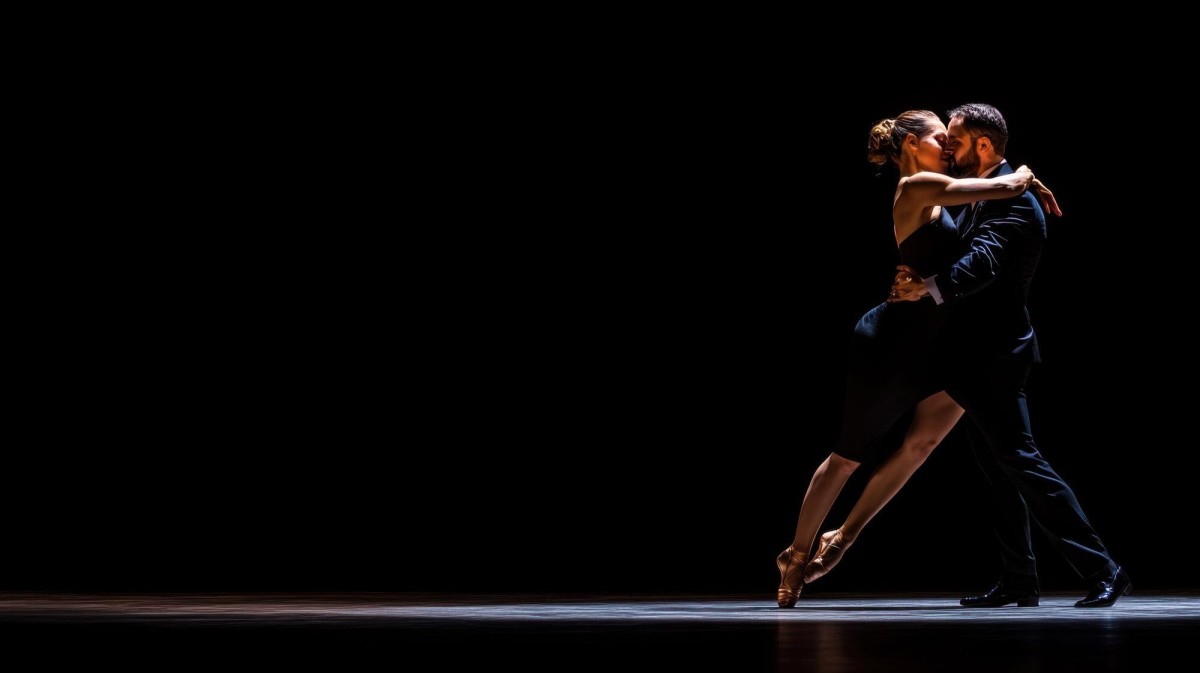
Improvisation plays a big part in this. Unlike choreographed routines you memorize and repeat, tango is largely improvised in the moment. The leader decides where to go, and the follower interprets those signals in time. There's no script to fall back on, which keeps the brain actively involved instead of running on autopilot.
Social cues add another layer. To stay in sync with a partner, you have to read subtle physical signals, which activates the parts of your brain responsible for awareness and interpretation. Combined with music, rhythm, and movement, it's a demanding mental workout wrapped inside something that feels nothing like exercise.
The brain responds to that challenge by creating new connections and staying more flexible - which is what helps protect it as you age. See tango in action through our gallery.
The Emotional and Social Side of Dancing That Nobody Talks About Enough
Most of the conversation around dance focuses on the physical side - the fitness, the coordination, the calories. But the emotional results are just as significant and, for many, it's the part that keeps them coming back week after week.
Dancing cuts back on stress in a way that's hard to replicate in a gym. Music alone has a measurable effect on mood, and add movement and another person into the combination, the result is something legitimately relaxing. Your nervous system responds to rhythm, and your brain starts to release feel-good chemicals that work against anxiety and low mood.
Tango takes this further because of the close hold. Partners have to communicate almost entirely without words - through weight, pressure, and timing. That non-verbal connection is rare in life, and it turns out that physical touch - even between strangers - has a real effect on how safe and settled a person feels.
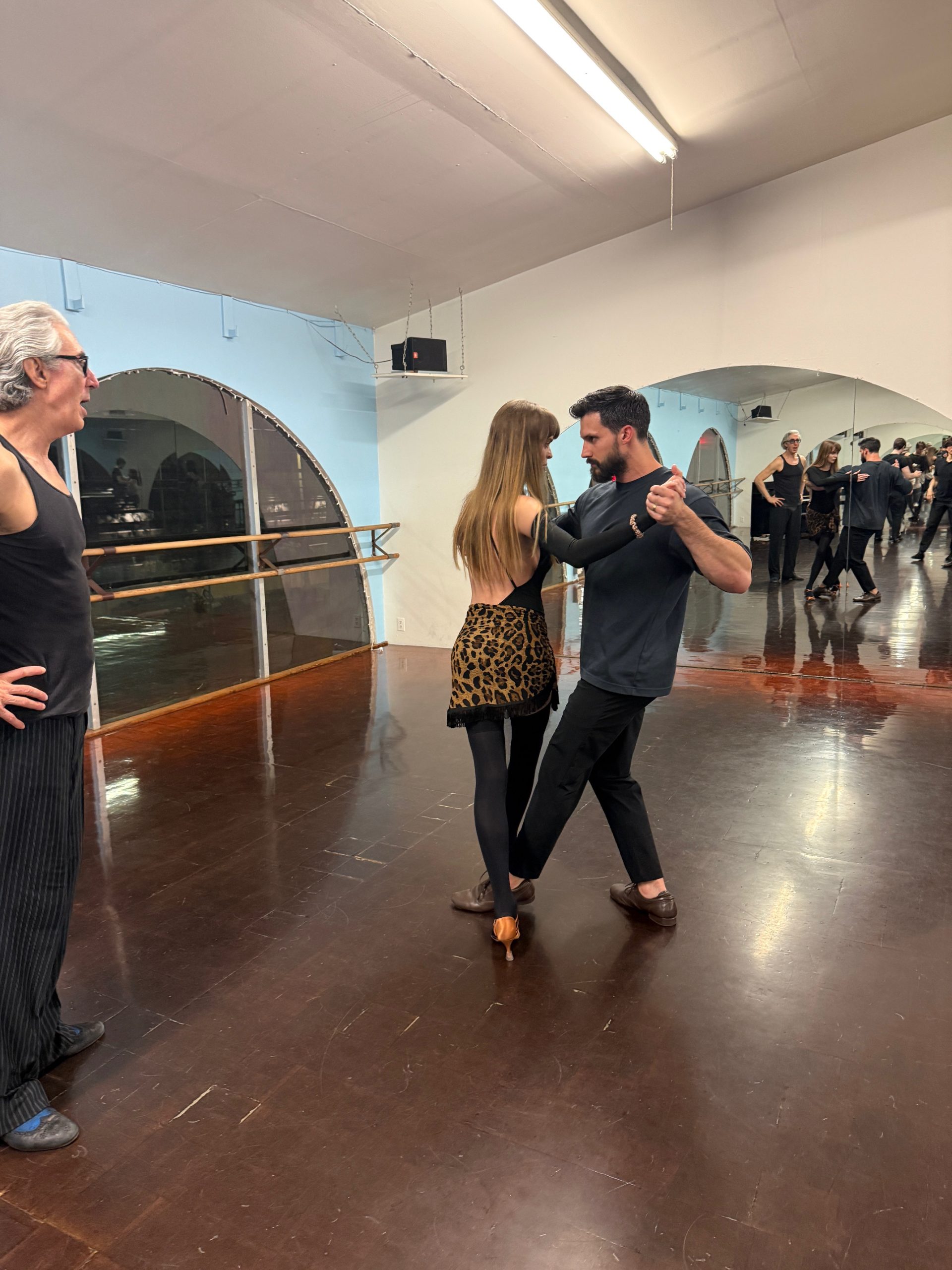
Modern life can seem quite isolating, even when you're surrounded by people. Dance classes - especially ones with a social ingredient like tango milongas - create genuine community. You rotate partners, you learn together, and you share a language that doesn't need translation. There are many milongas in Los Angeles for social gatherings and our beginner Tango classes will prepare you for the experience!
This matters quite a bit for older adults in particular. Loneliness is a genuine health concern, and group dance classes give a reason to leave the house, to be around others, and to feel like part of something. The social schedule of it - arriving, greeting, dancing, communicating between songs - builds connection over time in a low-pressure way.
It's worth saying that you don't need to be emotionally having a hard time to benefit from this. Even for those who feel fine, the combination of touch, music, and movement is a reliable way to improve your mood and feel less in your head. Dance asks you to be present, and presence has a quiet way of pushing out whatever was weighing on you when you walked in.
Tango as Therapy - Especially for Parkinson's and Balance Issues
Of the ways tango benefits the body, its effect on those with Parkinson's disease is the most documented and the most striking. Parkinson's disrupts the signals the brain sends to control movement, which gives you shuffling steps, poor balance, and a higher chance of falling. Tango's slow, deliberate footwork and non-stop direction changes address those exact problems in a way that other exercises don't.
A 2010 study by Hackney and Earhart put this to the test. They compared Argentine tango to Foxtrot and Waltz in participants with Parkinson's and measured the results on the Berg Balance Scale, stride velocity, and backward stride length. Argentine tango came out ahead on all three. That matters because backward walking is one of the first things to deteriorate with Parkinson's and one of the hardest to retrain.
Tango works because of what it asks of the body. Each step is intentional and weighted. You pause, shift your balance, and then move - and you do that repeatedly in multiple directions. This trains the nervous system to manage the unpredictable balance demands that come up in life.
| Dance Style | Balance Training | Direction Changes | Slow, Controlled Steps | Studied in Parkinson's |
|---|---|---|---|---|
| Argentine Tango | High | Frequent | Yes | Yes - strong results |
| Foxtrot / Waltz | Moderate | Moderate | Partial | Yes - less effective |
| Aerobics / Zumba | Low to moderate | Variable | No | Rarely |
Tango's benefits are not limited to those with Parkinson's. Older adults who have a hard time with balance, people recovering from injury, or anyone who feels unsteady on their feet can gain quite a bit from this movement practice. The pace is forgiving and the footwork is grounded, which makes it accessible without being passive.
There are now dedicated tango programs run in clinical and community settings for people with neurological conditions. The social structure of partner dancing also factors in here - a partner's body gives physical feedback that helps with posture and weight distribution in real time.
How to Actually Get Started With Tango (Without Feeling Intimidated)
The biggest barrier to starting tango is almost never physical - it's the story beginners tell themselves before they walk through the door. Most beginners assume they need rhythm, coordination, or a partner before they can learn anything. None of that's true.
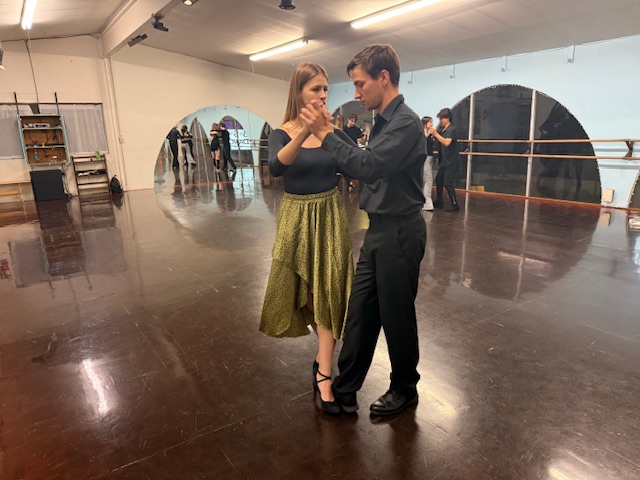
You don't need a partner to join a beginner class Tango class in Los Angeles. Most group classes rotate partners throughout the lesson, which is the better way to learn. Dancing with different people early on builds adaptability and confidence much faster than sticking with one person. Check out our schedule for new Tango classes in Los Angeles for times and locations.
Argentine Tango vs. Ballroom Tango
It's helpful to know that these are two distinct styles. Argentine tango is improvised, close-embrace, and connected to social dancing. Ballroom tango is more structured and performance-oriented with sharp, stylized movements. For health benefits and social connection, Argentine tango tends to be the more accessible and rewarding place to start.
What to Look for in a Beginner Class
Look for a class that focuses on fundamentals like posture, walking, and connection instead of flashy moves. A beginner class should feel welcoming and unhurried. If a class feels rushed or skips the basics to get to footwork, it's probably not the right fit. Tango classes with Jordi focus on the essentials right from the beginning and reinforce the correct way to dance Tango from the first class onwards.
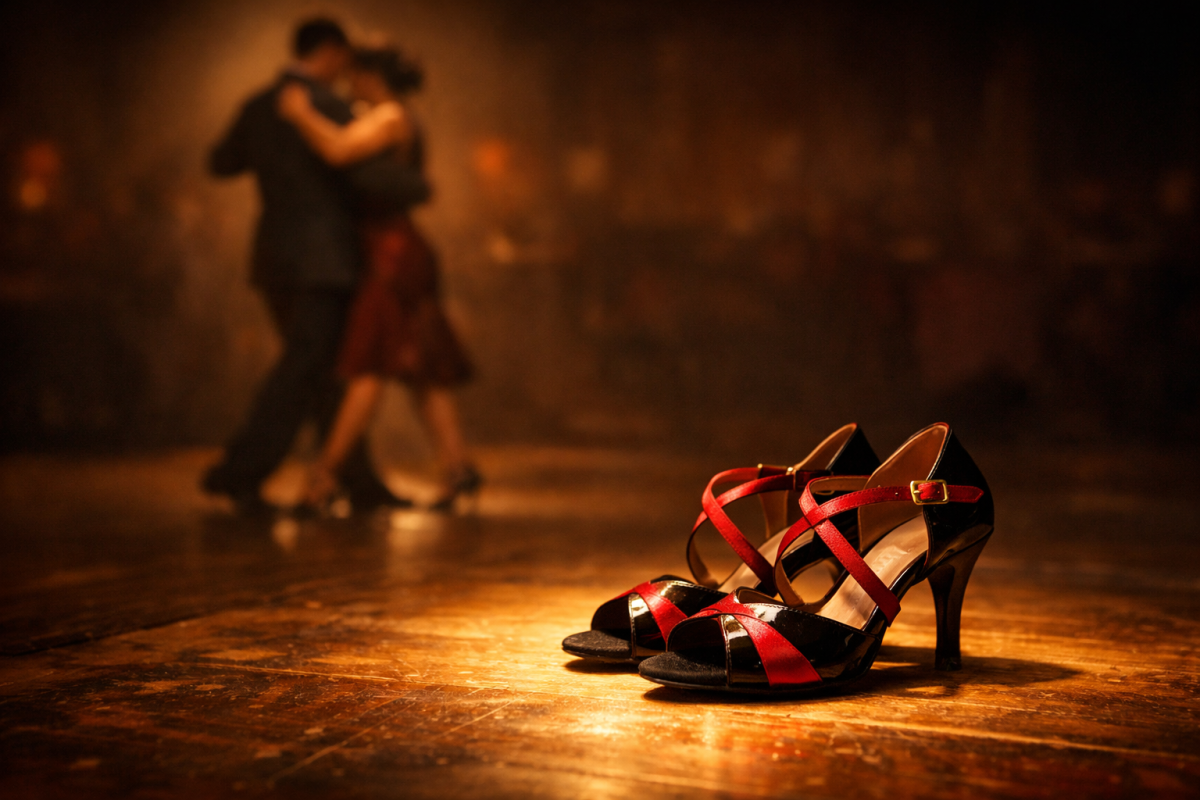
Wear shoes with smooth soles so your feet can pivot without catching on the floor. Avoid rubber-soled sneakers. Clothing should be comfortable and allow you to move freely - nothing more than that.
A Few Tips to Help You Stick With It
- Go to class at least once a week to build muscle memory
- Attend a milonga (a social tango event) to watch before you dance
- Be patient with the learning curve in the first month
- Focus on connection and posture rather than memorizing steps
- Talk to other beginners - you are all in the same position
Consistency matters far more than natural talent here. People who show up week after week - even when progress feels slow - are the ones who get good at this.
Lace Up, Step Out, and Let Tango Do Its Thing
You don't need to be coordinated, experienced, or confident to start. All it takes is one small step - maybe looking for a beginner tango class near you, or reaching out to a person who can point you in the right direction. The rest takes care of itself once you're in the room.
A reminder of why now is a great time to give it a try:
- Boosts cardiovascular health in a way that feels nothing like a workout
- Sharpens memory and focus by challenging your brain to learn new patterns
- Reduces stress and anxiety through movement, music, and human connection
- Improves balance and posture, especially beneficial as we age
- Builds a social community that supports emotional well-being
If you have any questions or want to know about getting started, we'd love to hear from you. Email us at YouCanTangoLA@gmail.com or call/text 310-562-9340 - we're here so you can take that first step. Your best dance is still ahead of you.